
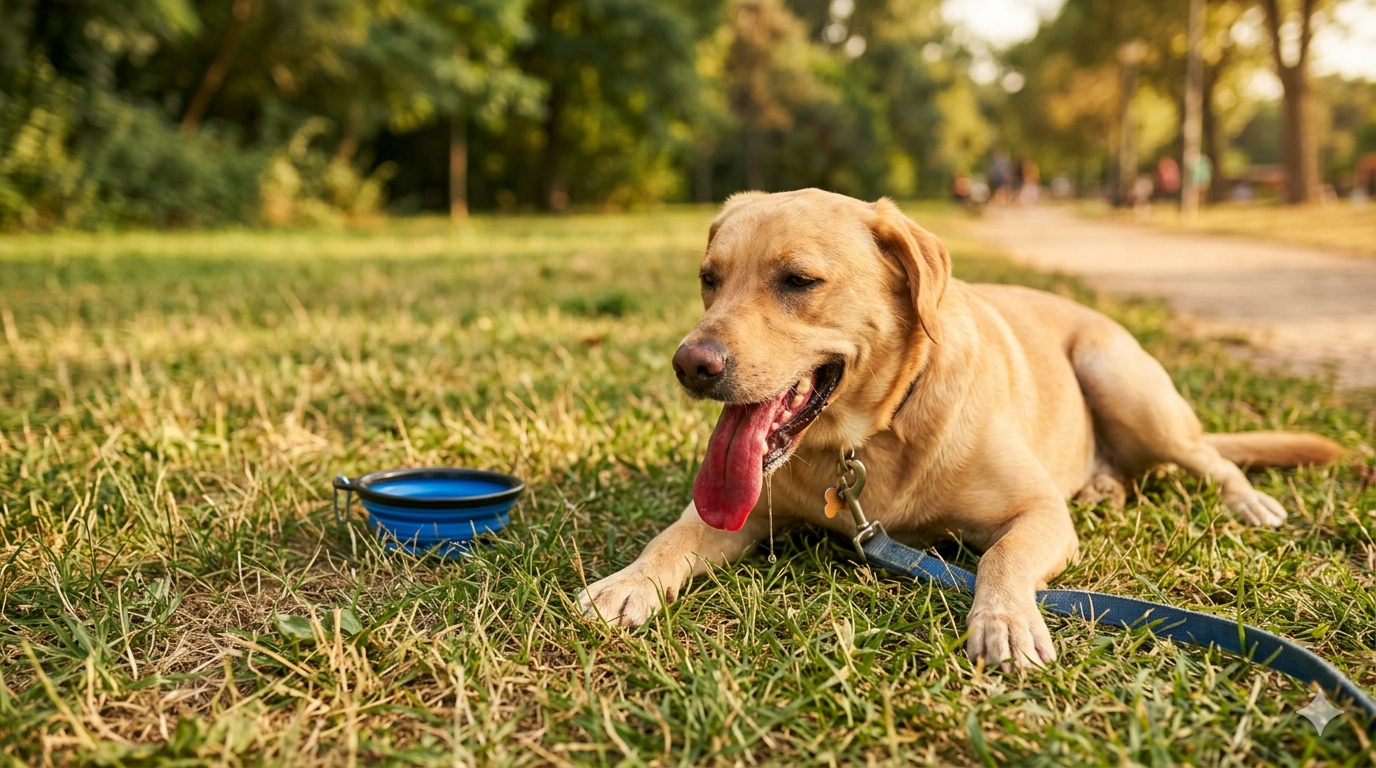
What are the signs of overheating?
As temperatures climb during the summer months, the risks to our domesticated companions increase exponentially. Unlike humans, who possess an intricate system of sweat glands to regulate body temperature through evaporation, dogs and cats are physiologically disadvantaged in the heat. They rely primarily on panting and minimal sweating through their paw pads to dissipate warmth. When the ambient temperature nears their internal body temperature, these mechanisms fail, leading to hyperthermia—commonly known as heatstroke. For a pet owner, the ability to recognize the subtle and overt signs of overheating is the difference between a minor scare and a fatal emergency.
The Canine Indicators: More Than Just Panting
Dogs are often more susceptible to overheating because of their active lifestyles. While every dog pants after exercise, “heatstroke panting” has a distinct, frantic quality. It is often louder, harsher, and accompanied by a wide, flattened tongue that may appear dark red or even purple. This discoloration is a sign of poor oxygenation and extreme cardiovascular stress.
Beyond the breath, a dog’s physical behavior will shift. You may notice hypersalivation, where the dog produces thick, ropey drool as the body tries desperately to moisture-cool the airway. As the condition progresses, neurological signs emerge. A dog suffering from heat exhaustion will often appear “drunk” or disoriented, staggering as they walk (ataxia). In severe cases, the dog may collapse entirely or suffer from seizures. Another tell-tale sign is the state of their gums; if you lift their lip and find the tissue is dry, tacky, or a deep “brick” red instead of a healthy pink, their circulatory system is in crisis.
The Feline Indicators: A Subtle Emergency
Cats are notoriously stoic, making them more difficult to diagnose until they are in significant distress. Because cats are generally sedentary and seek out cool, tiled surfaces, a cat that is visibly struggling with heat is usually in a dire situation.
The most critical sign in a cat is open-mouth breathing. Under normal circumstances, cats almost never pant. If a cat is breathing with its mouth open, it is a signal that their internal cooling mechanisms have been completely overwhelmed. Furthermore, an overheating cat will often exhibit extreme restlessness. They may pace frantically, moving from one spot to another in a desperate search for a cool surface, or they may groom themselves obsessively. This “spit-bathing” is an instinctive attempt to use saliva as a substitute for sweat. If the cat becomes lethargic or stops responding to visual stimuli, their body temperature has likely exceeded $105^\circ\text{F}$ ($40.5^\circ\text{C}$), requiring immediate intervention.
Immediate Action and Prevention
If you suspect your pet is overheating, the goal is to lower their temperature gradually. Avoid using ice or freezing water, as this can cause the peripheral blood vessels to constrict, which actually traps heat in the core organs and can trigger shock. Instead, use lukewarm or cool water to dampen their fur and place them in front of a fan.
The physiology of our pets means that by the time we see symptoms, the situation is already urgent. Prevention remains the most effective tool: never leave a pet in a parked car—where temperatures can rise by $20^\circ$ in just ten minutes—and ensure that “flat-faced” (brachycephalic) breeds like Bulldogs or Persians are kept in air-conditioned environments. Understanding these signs allows us to act as the advocates our pets need, ensuring that the warmth of summer remains a season of play rather than a season of peril.


 Available 7 days a week
 256-bit encrypted